SOC 2 compliance is a security framework that validates how service organizations protect sensitive customer data. Developed by the AICPA (American Institute of Certified Public Accountants), SOC 2 attestation provides third-party verification of security controls across five Trust Service Criteria.
Important terminology note: While many people say "SOC 2 certification," the technically correct term is "SOC 2 attestation." A CPA firm attests to your controls rather than certifying them. Throughout this guide, we'll use the proper terminology, though you'll encounter both terms in practice.
SOC 2 has become table stakes for B2B SaaS companies selling to enterprise customers. But here's what most guides won't tell you: Getting the attestation is the easy part. Maintaining compliance year-round without derailing your engineering team is where most companies struggle.
I've been on both sides of this process. As a former UI auditor (yes, I literally audited AWS), I've seen what works and what creates expensive compliance theater. At Mycroft, we've now completed 60+ SOC 2 audits with customers, and I can tell you the gap between "passing the audit" and "actually being secure" is wider than most realize.
SOC 2 (System and Organization Controls 2) is a voluntary framework that evaluates an organization's data security controls and how well service organizations protect customer data. Unlike regulations like HIPAA or GDPR that mandate specific security practices, SOC 2 provides flexibility in how you implement controls—as long as you can prove they're effective.
For B2B SaaS companies, SOC 2 attestation is effectively mandatory. Enterprise buyers won't sign contracts without it, and procurement teams treat it as a minimum security requirement.
Clarify that it’s not a “certification” but an attestation (but acknowledge some people colloquially say “SOC 2 certified”
The AICPA offers two levels of SOC 2 attestation, each serving different business needs and buyer requirements. Understanding which type you need—and when—saves significant time and cost.
Type I attestation validates that you've implemented appropriate security controls and that they're designed correctly to meet SOC 2 requirements. Think of it as a snapshot—the auditor examines your controls at a specific moment and confirms they're built properly.
The timeline is typically 4-6 weeks after you've implemented all required controls. The auditor tests control design through documentation review, system walkthroughs, and configuration checks. They're not testing whether controls work consistently over time—just that they exist and are appropriately designed.
Type I works well for early-stage companies that need to prove basic security credibility to close initial enterprise deals. It's faster and less expensive than Type II, making it an accessible first step for startups entering enterprise markets.
Type II attestation goes further by validating that your controls don't just exist—they work consistently over an extended period. This requires an observation period (minimum 3 months, typically 6-12 months) during which auditors test control operation through sampling.
The auditor collects evidence throughout the observation period:
They're validating that controls operated effectively every single day, not just when you knew an audit was coming.
Type II is what most enterprise buyers eventually require, especially in regulated industries like healthcare, finance, and government. It demonstrates operational maturity and proves you maintain security standards consistently, not just for the audit.
Most companies start with Type I to prove their controls exist and are well-designed, then pursue Type II once they've demonstrated consistent operation over time.
SOC 2 audits assess your controls across up to five Trust Service Criteria. Security is mandatory; the others are optional based on what's relevant to your services:
Protection against unauthorized access—the foundation of every SOC 2 audit. Security covers:
Every SOC 2 audit includes Security because it's fundamental to protecting customer data. The other criteria build on this foundation, but a service organization's controls for Security must be present and properly implemented before auditors will even consider the optional criteria.
System uptime and performance commitments. Availability evaluates whether your services remain accessible and functional when customers need them. This includes:
Include Availability if your SLA commitments or customer expectations require high uptime. If you're promising 99.9% availability or operating mission-critical systems, auditors will want to see evidence you can actually deliver on those commitments.
Systems process data completely, accurately, and in a timely manner. Processing Integrity covers:
This criterion matters most for companies handling financial transactions, healthcare records, or other scenarios where data accuracy is critical. If incorrect processing creates regulatory risk or customer harm, you'll want Processing Integrity in scope.
Protection of confidential information beyond basic security controls. While Security covers access controls for all data, Confidentiality addresses how you handle information specifically designated as confidential—trade secrets, proprietary algorithms, sensitive data like customer business information that goes beyond standard PII.
Confidentiality includes data classification schemes (how you label and track confidential data), NDAs and contractual commitments, encryption standards beyond baseline security, and access restrictions that limit confidential data to specific roles or individuals.
Personal information collection, use, retention, and disclosure practices. Privacy aligns with regulations like GDPR, CCPA, and other data protection frameworks. It covers:
Include Privacy if you're handling European customer data (GDPR requirements), California consumer data (CCPA), or if customers specifically require privacy attestation as part of their vendor risk management.
I've watched deals die because of missing SOC 2 reports. Not because the company wasn't secure, but because they couldn't prove it to procurement teams who won't engage without third-party validation.
SOC 2 attestation isn't just a nice-to-have for enterprise sales. It's the difference between getting meetings with Fortune 500 buyers and getting filtered out before your first conversation.
SOC 2 attestation removes a critical sales objection. Enterprise procurement teams use it as a filter; no SOC 2 often means no conversation. For B2B SaaS companies, this directly impacts revenue:
Third-party validation matters. SOC 2 attestation proves you're not running "security theater"—you have documented controls that an independent CPA firm has verified. This builds customer trust in ways self-attestation cannot.
In crowded markets, SOC 2 attestation differentiates you from competitors who lack validation. I've seen companies close deals specifically because they had SOC 2 and their competitor didn't, even when the competitor's actual security was comparable. The attestation signals maturity and investment in security that resonates with enterprise buyers.
The audit process formalizes security policies, establishes baseline controls across your stack, and creates accountability. Even if enterprise sales weren't a driver, SOC 2 pushes companies toward better security practices.
But here's what most articles won't tell you: SOC 2 alone isn't a complete security program. It's one framework focused primarily on compliance requirements. Real security requires covering all five security pillars: compliance, cloud security, application security, device management, and third-party risk.
I've guided dozens of companies through their first SOC 2 audit. The ones who succeed share common patterns: They prepare thoroughly, scope strategically, establish strong internal controls, and build for continuous compliance from day one—not just for passing a one-time audit.
The companies that struggle? They treat SOC 2 as a checkbox exercise, rush through preparation, and optimize for the audit rather than for actual security. They pass, then scramble again 12 months later because nothing was built to last.
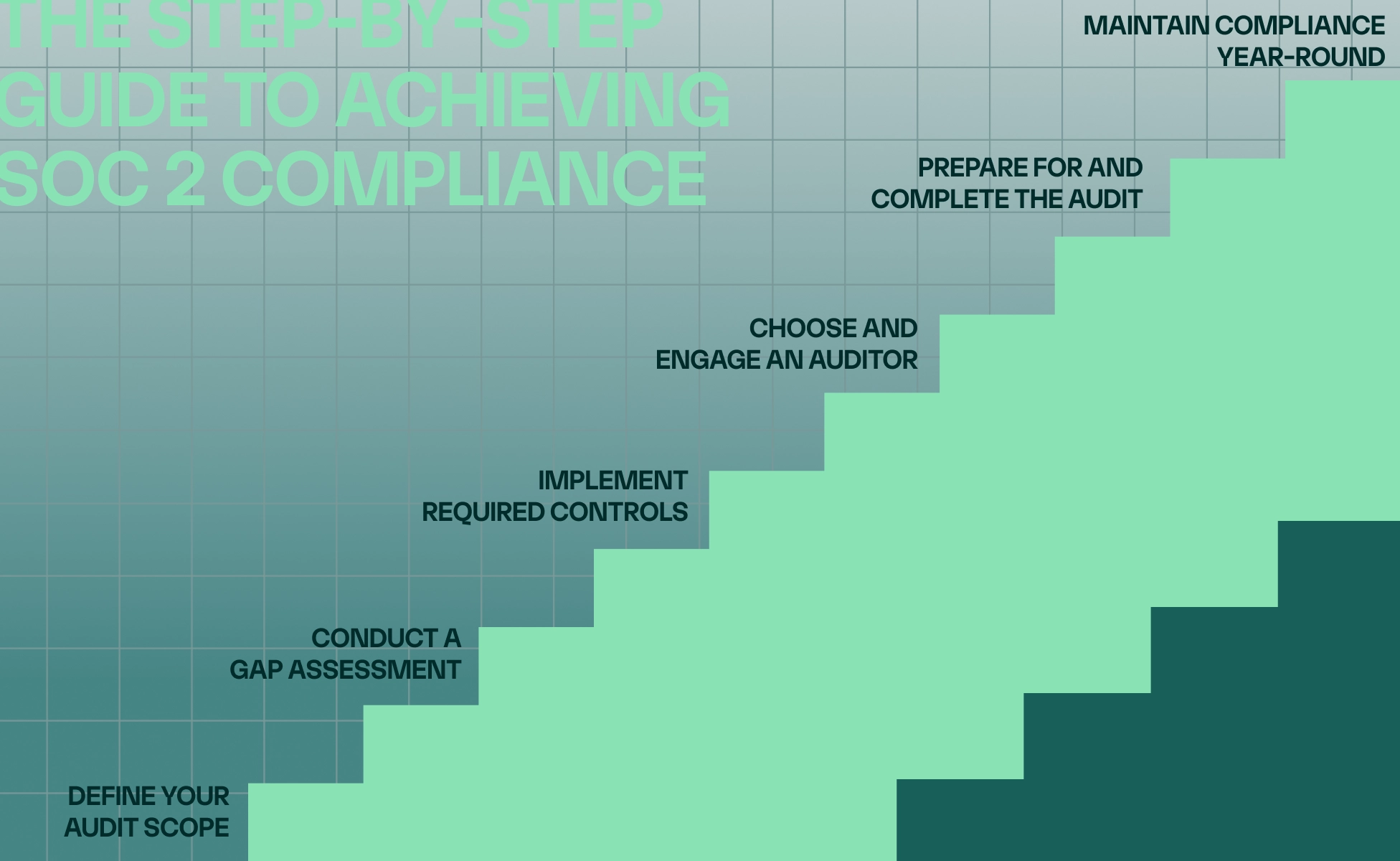
Here's the playbook that actually works:
Before engaging an auditor, you need foundational security infrastructure and documentation in place. Trying to implement controls during the audit creates delays, increases costs, and often results in findings that block attestation.
Determine which Trust Service Criteria apply
Start with Security (mandatory) for Type I. Add Availability, Processing Integrity, Confidentiality, or Privacy based on customer requirements and what's relevant to your service.
Be strategic here. Each additional criterion increases audit complexity and cost. Only include criteria that customers actually require or that provide competitive advantage.
Map in-scope systems and data
Define exactly what's being audited:
Scoping too broadly on your first audit increases complexity, cost, and timeline. Start narrow (core production systems, Security only), then expand as needed.
Evaluate existing controls against SOC 2 requirements
Document what controls you already have in place:
Identify remediation priorities
Found gaps between your current state and SOC 2 requirements? Don't panic—every company has them. The key is strategic prioritization:
Common controls most companies need
Here's where the rubber meets the road. You've identified the gaps—now you need to actually implement the controls that will pass audit testing. This isn't just about checking boxes; it's about building security infrastructure that actually protects your customers.
Most compliance tools can monitor these controls. Few can actually implement and manage them. This is where I see companies hit the wall. They buy a GRC platform expecting it to "automate everything," then realize someone still needs to configure those integrations, tune the monitoring rules, remediate the findings, and maintain it all. The platform gives you visibility—but you still need people to do the work.
At Mycroft, we built the Risk Operations Center specifically to solve this gap. The platform provides the automation and monitoring, but our forward-deployed engineers handle the operational burden—implementing controls, managing remediation, and interfacing with auditors. Your engineering team stays focused on product, not compliance tasks.
Select a qualified CPA firm
Not all audit firms are created equal. You want SOC 2 specialists who understand your industry, work with companies at your stage, and can move at reasonable speed without cutting corners.
Look for firms with deep SOC 2 experience in B2B SaaS. Check references from similar companies—ask about responsiveness, timeline predictability, and how they handle edge cases. Ensure they're AICPA-approved and have relevant industry credentials.
Avoid firms that promise unrealistic timelines ("SOC 2 in two weeks!") or charge suspiciously low fees. Quality audits take time, and you get what you pay for. A cheap audit that results in qualification or findings costs more than paying appropriate rates upfront.
Top audit firms for SOC 2
Mycroft maintains preferred vendor status with multiple audit firms. We know what auditors expect and how to prepare evidence that passes review on the first attempt.
You've implemented controls, chosen your auditor, and kicked off the engagement. Now comes the evidence collection and audit fieldwork—the process that separates companies who prepared properly from those who tried to cut corners.
Evidence collection and organization
Auditors will request 50-100+ pieces of evidence:
Auditor fieldwork
The audit firm will:
This is where most companies struggle: You optimized for passing the audit, but controls need continuous operation and monitoring. Evidence collection can't stop. New employees, systems, and vendors require ongoing management. Quarterly or annual re-certification requires the same rigor you just completed.
The continuous compliance challenge
I've seen this pattern dozens of times: Company gets SOC 2, everyone celebrates, engineering returns to product work, compliance program withers. Eleven months later, panic sets in because re-certification is approaching, and nothing's been maintained.
This approach wastes engineering time on repeated manual work, creates compliance drift that goes unnoticed for months, leaves you vulnerable between audit periods, and generates stress and distraction during re-certification.
The companies that get this right build for continuous compliance from day one. They automate evidence collection, implement continuous monitoring, integrate remediation into existing workflows, and—critically—they either staff for ongoing compliance operations or partner with a Risk Operations Center that handles it for them.
Let me be direct: Most companies waste time and money on SOC 2 because they believe the marketing promises from compliance tool vendors.
"Get compliant in weeks!" "Automate everything!" "No engineering time required!"
These claims aren't technically lies—they're just misleading about what "automated" actually means in practice.
The standard path to SOC 2
The problem with this approach
"Fast and easy" tools still need someone to configure, maintain, and remediate findings. Engineering resources get diverted from product work to compliance work. You optimize for passing the audit, not for actual security. The result? "Checkbox compliance"—certified on paper, vulnerable in practice.
I've audited companies with perfect SOC 2 reports that had terrible security. I've also seen companies with strong security struggle to pass audits because they couldn't document their controls properly.
The gap between "compliant" and "secure" is real, and it's wider than most people realize.
What checkbox compliance looks like:
What it doesn't guarantee:
Why this happens:
Most compliance tools optimize for "audit readiness," not operational security. They give you dashboards and automated checks, but someone still needs to:
This is the gap between compliance automation and compliance operations. Tools alone don't solve this; you need an operating model that combines automation with intelligence and hands-on operational support.
That's why we built Mycroft differently. The platform provides automation and AI-powered contextualization, but the Risk Operations Center provides the operational support that actually makes compliance work. You're not buying software and hoping your team figures it out—you're partnering with security practitioners who run the program for yo
Here's the uncomfortable truth: SOC 2 attestation proves you meet minimum compliance standards. It doesn't prove you're actually secure.
I've seen too many companies treat SOC 2 as their entire security strategy. They pass the audit, celebrate, and assume they're protected. Then they get breached—despite being "SOC 2 compliant"—because compliance frameworks only cover part of what real security requires.
What SOC 2 doesn't address
SOC 2 focuses on controls and compliance. It doesn't cover:
Cloud-native infrastructure security: Modern cloud environments need continuous configuration scanning, not just annual reviews.
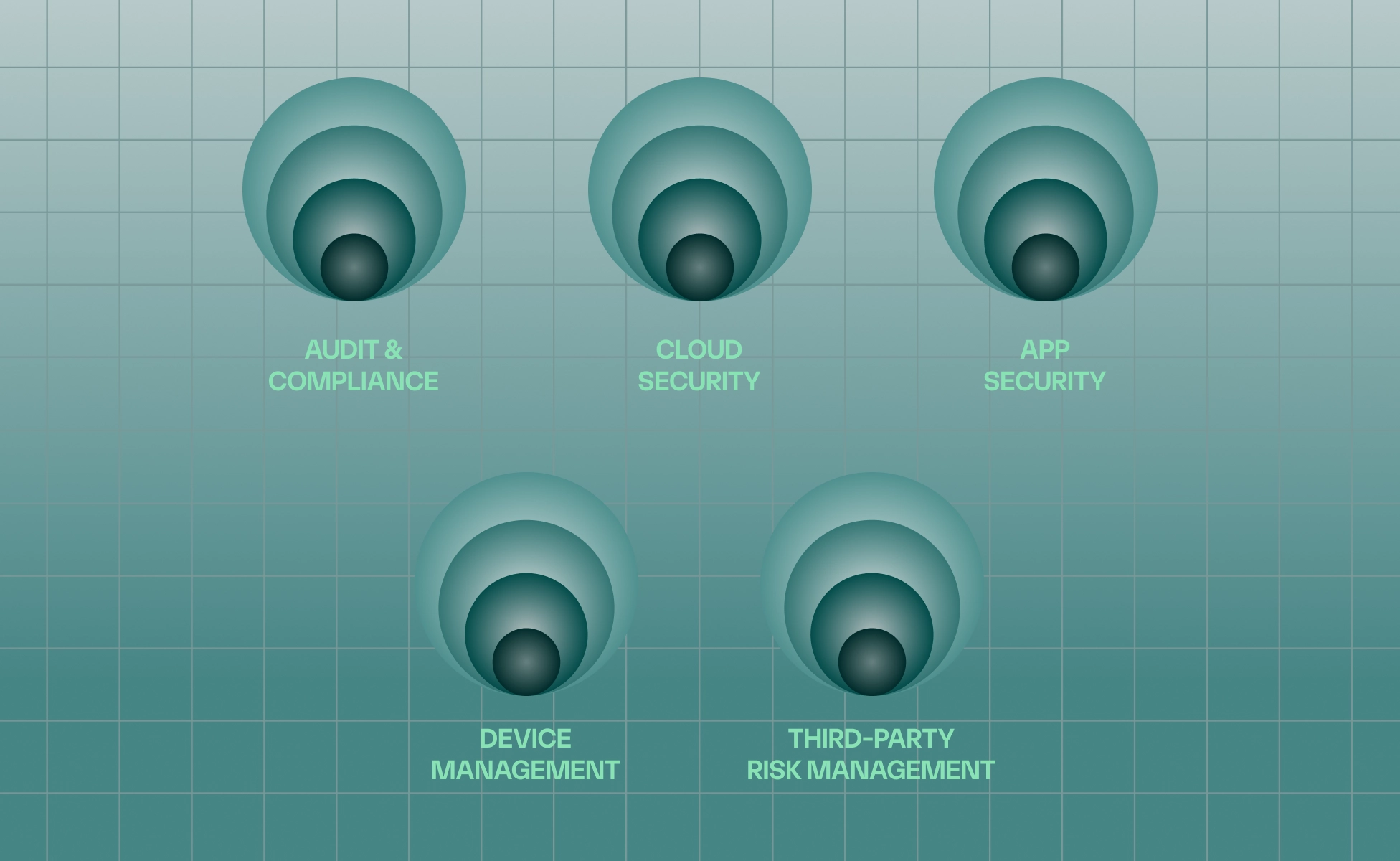
The five security pillars every company needs
Real security requires coverage across five interconnected pillars:
Mycroft consolidates your entire security stack into one platform with agentic AI and forward-deployed engineers who operate it for you. SOC 2 becomes one framework among many—managed continuously without consuming your engineering resources. You get comprehensive security, not just compliance checkbox theater.
I spent years as an auditor watching companies struggle with compliance. The tools existed, the frameworks were clear, but companies still wasted massive engineering time and money because nobody solved the operational problem.
That's why we built Mycroft as a Risk Operations Center, not just another GRC platform. Most tools give you a platform for compliance automation. Mycroft provides a Risk Operations Center that handles compliance end-to-end—automation plus the people who actually run your program.
What this means in practice:
The difference between platforms and operations shows up in customer outcomes. Companies working with Mycroft achieve SOC 2 faster, with less engineering time, and maintain compliance continuously—not just during audit periods.
The difference: Real security, not just checkbox compliance. SOC 2 managed continuously without derailing your engineering team.
Book a demo today to see how Mycroft's Risk Operations Center can handle your entire compliance program—from audit prep to continuous monitoring.
SOC 2 compliance means your organization has completed a SOC 2 audit and received an attestation report from an independent CPA firm. This report validates that your security controls meet the AICPA's Trust Service Criteria for protecting customer data. Note: The proper term is "SOC 2 attestation" rather than "certification," though both are used colloquially.
Type I attestation typically takes 3-6 months from initial preparation to report issuance, assuming you're starting from scratch. Type II requires an additional 3-12 month observation period to demonstrate consistent control operation. Companies with existing security programs and the right operational support can achieve Type I in 4-8 weeks.
Common mistakes include:
Type I validates that security controls are properly designed at a specific point in time (4-6 week audit). Type II validates both the design and operating effectiveness of controls over a period of time, usually 3-12 months (requires observation period plus audit). Type I proves your controls exist and are well-designed; Type II proves they consistently work as intended.
Start with Type I to prove your controls exist and are properly designed. Most enterprise customers eventually require Type II to validate ongoing operational effectiveness. Type II is mandatory for highly regulated industries (healthcare, finance) and security-conscious enterprise buyers. Plan to complete Type I first, then pursue Type II after demonstrating 3-12 months of consistent control operation.
Total first-year costs typically range from $50,000-$185,000 including audit fees ($15K-$50K), tooling and services ($50K-$100K+), and internal resource time. Consolidated approaches like Mycroft's Risk Operations Center reduce costs by replacing fragmented point solutions with a unified platform and operational support.
The five Trust Service Criteria are:
No. Claims of "SOC 2 in weeks" are misleading. While the final audit might take 4-6 weeks, you need months of preparation beforehand to implement controls, collect evidence, and demonstrate operational readiness. Companies starting from scratch typically need 3-6 months minimum to reach Type I attestation. Accelerated timelines (6-8 weeks) are possible with existing security infrastructure and operational support from a Risk Operations Center.
Common SOC 2 controls include:
Specific controls vary based on your scope and Trust Service Criteria selection.
No, but compliance tools significantly reduce manual work and audit risk. You can manage SOC 2 with spreadsheets and manual evidence collection, but this doesn't scale and increases the likelihood of missing evidence or failing audits. Compliance automation platforms or Risk Operations Centers streamline evidence collection, control monitoring, and audit preparation—reducing engineering time spent on compliance by 50-70%.
Maintaining SOC 2 compliance requires continuous control operation, evidence collection, monitoring, and annual re-certification. Most companies struggle because they optimized for the initial audit, not long-term operations.
Effective maintenance requires:
Automated platforms or Risk Operations Centers make compliance continuous rather than periodic.
Yes, if you sell B2B SaaS to enterprise customers. SOC 2 is often mandatory for procurement and directly impacts revenue by removing a common sales objection. However, attestation alone isn't sufficient; you need real security across all five security pillars (compliance, cloud security, application security, device management, third-party risk), not just checkbox compliance theater.
Both validate information security management, but SOC 2 is US-focused and audited by CPAs, while ISO 27001 is an international standard certified by accredited bodies.
Key differences:
Many companies pursue both—SOC 2 for US enterprise sales, ISO 27001 for global markets and European customers who prefer international standards.





.webp)